Skiing is a broad term that covers many different disciplines that can be practiced on the mountain. From the raw and ungroomed wild off-piste to the shaped and carefully organized park. Therefore, there is also a lot of different equipment designed to work in specific places on the mountain.
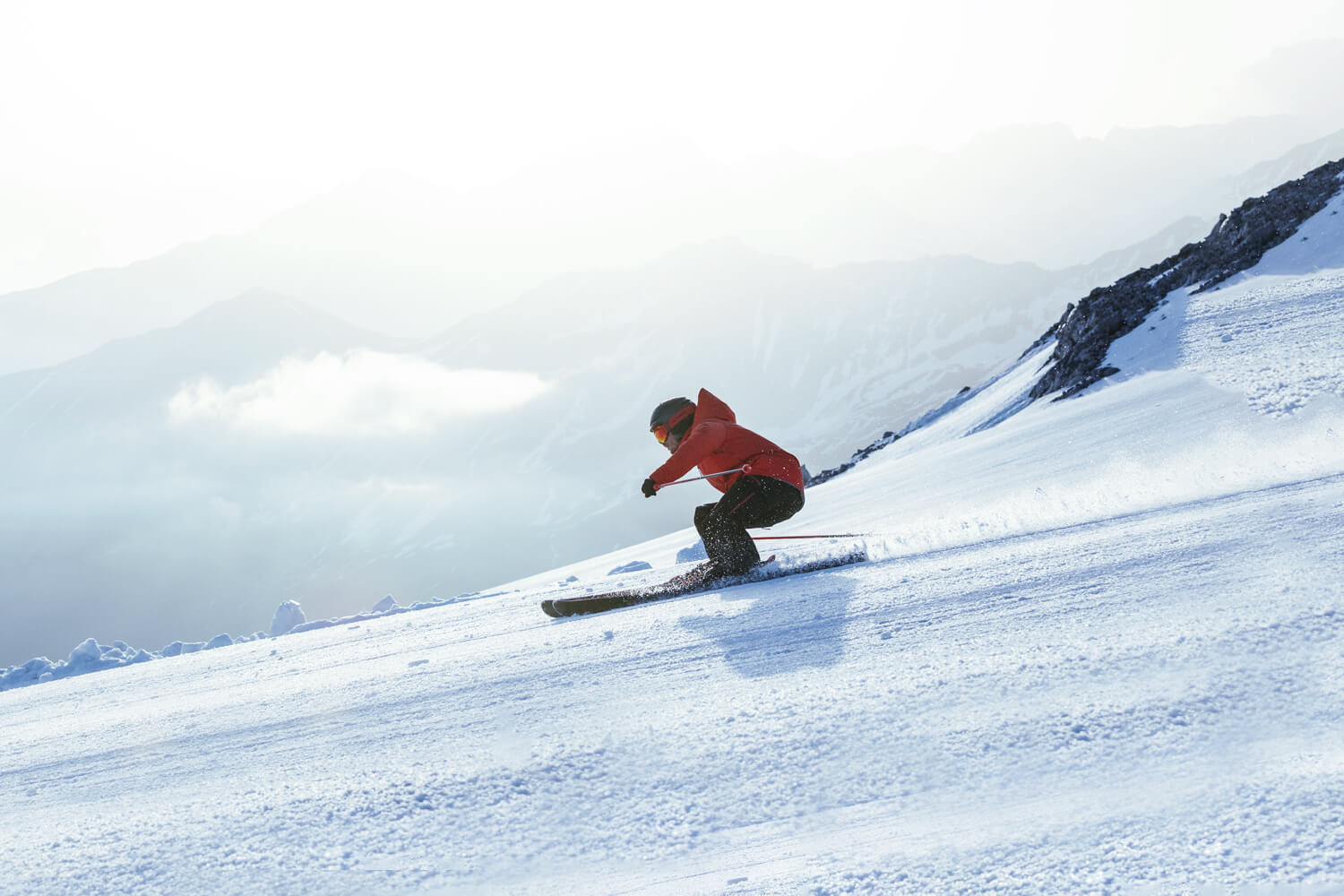
In this blog post, we'll focus on skiing on the piste and take a closer look at the piste ski as a tool for attacking the wide, well-groomed boulevards.
Thepiste ski is the classic ski and clearly the type of ski most people use when heading south or north. A piste ski is designed to be able to switch from edge to edge at lightning speed while offering the skier full stability. This is due to the ski's iconic shape, which is narrow underfoot (65-80mm) and wider at the ends, as well as the reinforcement of the ski's construction, typically in the form of a layer of titanal.
Types of piste skis
Downhill skis can be further divided into a number of subcategories that relate to the ski's turning radius. The turn radius can usually be read on the ski along with its dimensions and is a measure of how big a circle the ski will cut in the snow if you put it on edge.
A ski with a shorter turning radius (11-14 meters) is called a Slalom ski (SL) or a small/short carv (SC) ski. Slalom skis are for those who love to make a lot of fun short turns, with the shape of the ski helping you through each turn. The ski is designed to create the turn for you and with a shorter length it is also easier to rotate underfoot.
Skis with a turning radius between 14-17 meters are designed to make both long and short turns. For many skiers, this is the sweet spot. An experienced skier will still be able to make nice, fast short turns and at the same time experience that the ski will create bigger and faster turns when it is put on edge. This type of ski is ideal for the skier who likes a bit of everything and is often the ski instructor's favorite tool for teaching and training.
Finally, we have skis with a turning radius of 17 meters and above. These skis are called giant slalom skis (ST/GS) and as the name suggests, they are designed to make big, wide turns with lots of speed. The construction is narrow, long and without much shape, which means that the ski doesn't turn very fast when it gets long on edge. On the other hand, it offers plenty of stability at high speed, which is where this type of ski shines. For a skilled skier, this type of ski is a great challenge as it places higher demands on the skier's technique and ability to rotate the ski.
What to look out for
When looking for a new ski, you need to consider what the ski will be used for and what level of skier you are. In addition to different turning radii, piste skis also have different widths, lengths and stiffness.
Many ski manufacturers have started to make piste skis with more width underfoot and at the tip. This gives the skier an advantage in rougher terrain or if you like to point your tips away from the piste and sniff some off-piste. Wider piste skis are close to the all-mountain category, but are still constructed with a nice shape that allows the skier to make nice carving turns with good control. The ski will feel a bit heavier and less responsive than a classic piste ski, but will give you much more freedom to ski where you want, when you want.
When it comes to the length of your new piste ski, a classic rule of thumb is that it should reach between your chin and eyes. A slalom ski will usually be on the shorter side, while a giant slalom ski can be slightly longer. If you're looking for a regular piste ski, use the rule of thumb and don't worry that the ski might be a little longer than you're used to.
The stiffness of a ski helps to keep it stable at high speed and ensure precise response when working with the ski. A stiffer ski will be more stable, but require more of the skier to put it on edge. That's why it's important to assess your own level before choosing your next ski. The stiffness of the ski comes from its construction, which starts with a wood core. The wood core allows the ski to flex so that the skier can make turns. A layer of Titanal or similar material can be further applied to increase the stiffness of the ski. Titanal is a high-tec aluminum alloy that can be applied either partially or on the entire ski. A full layer of titanal will create a very stiff and responsive ski that will typically be used for racing or very sporty skiing, while a more strategic placement on the ski can save weight, money and make the ski easier to work with.
To summarize
If you're looking for the perfect piste ski for you, we hope this brief introduction will help you on your way. With many manufacturers on the market and even more models, finding your new ski can be a jungle, but we are always ready to help you on the phone or in our store.
Hope to see you soon.