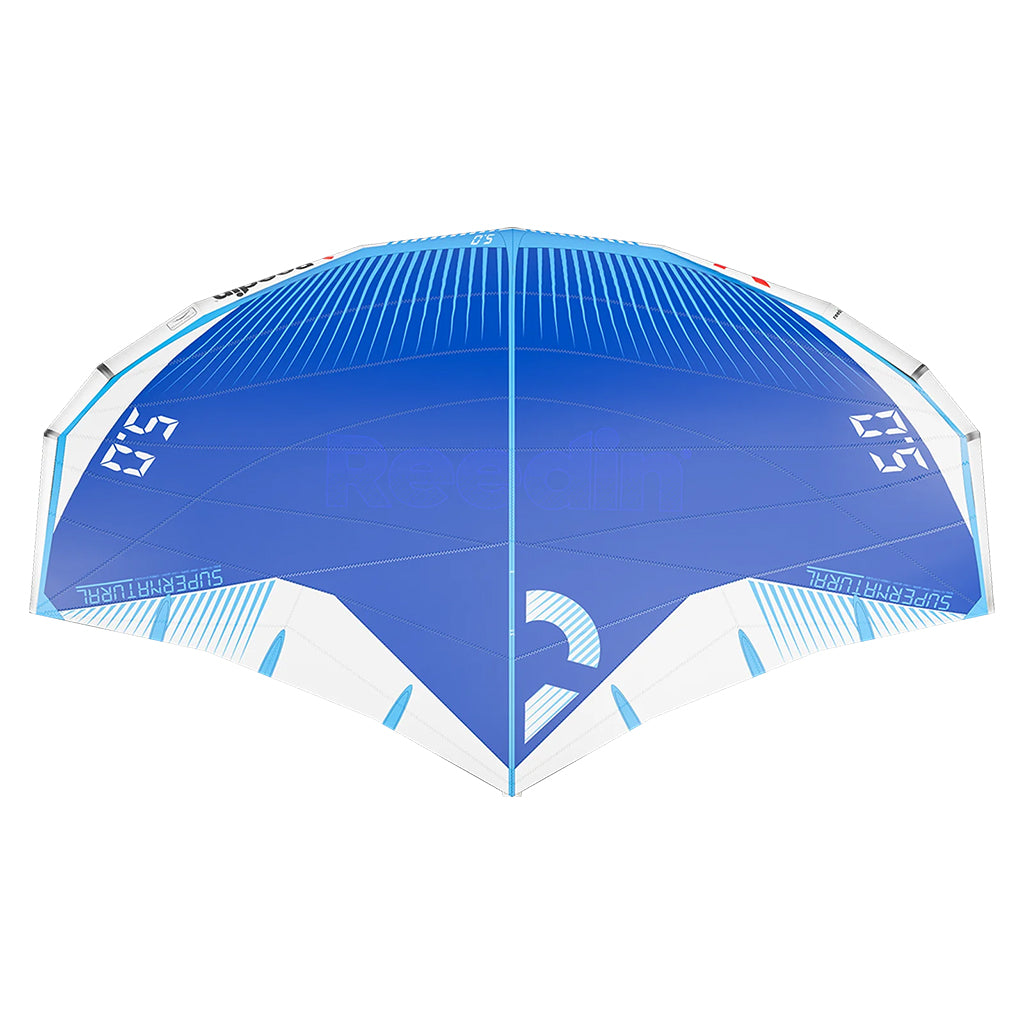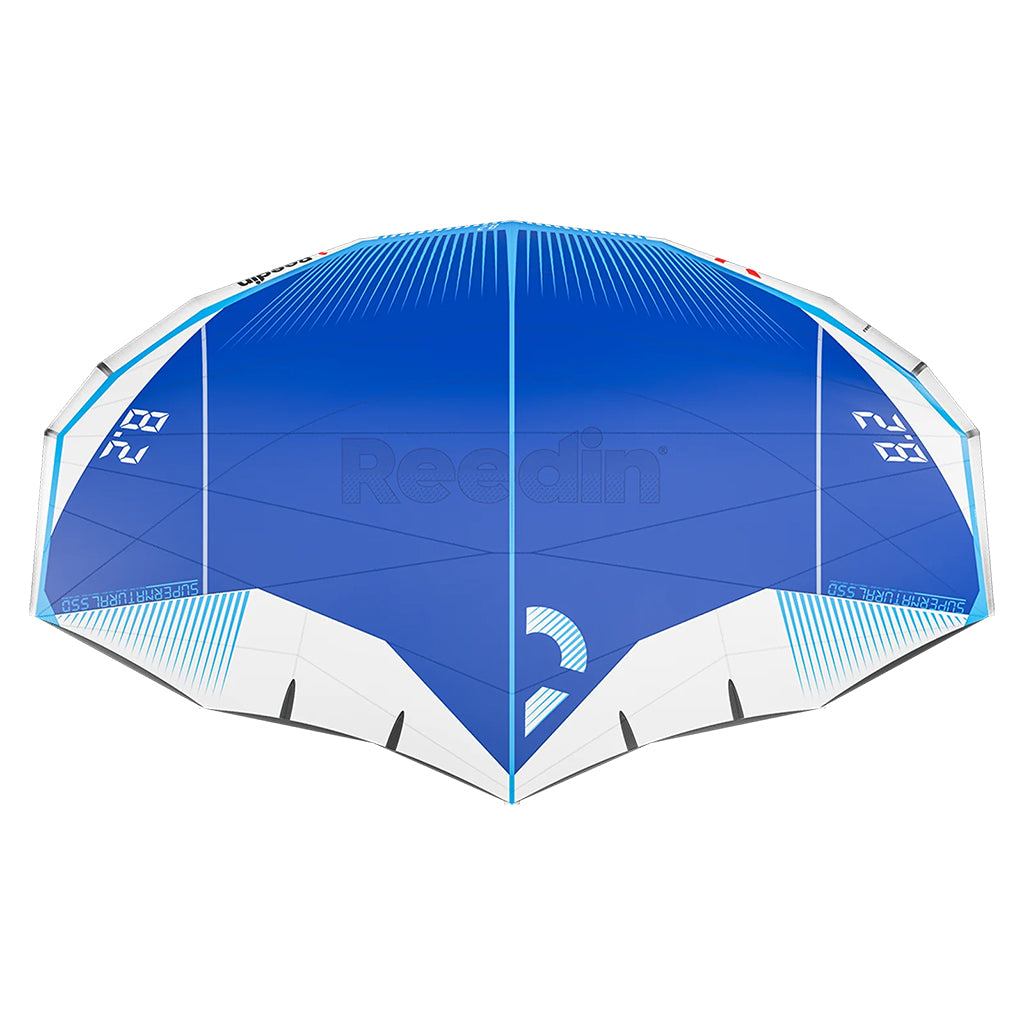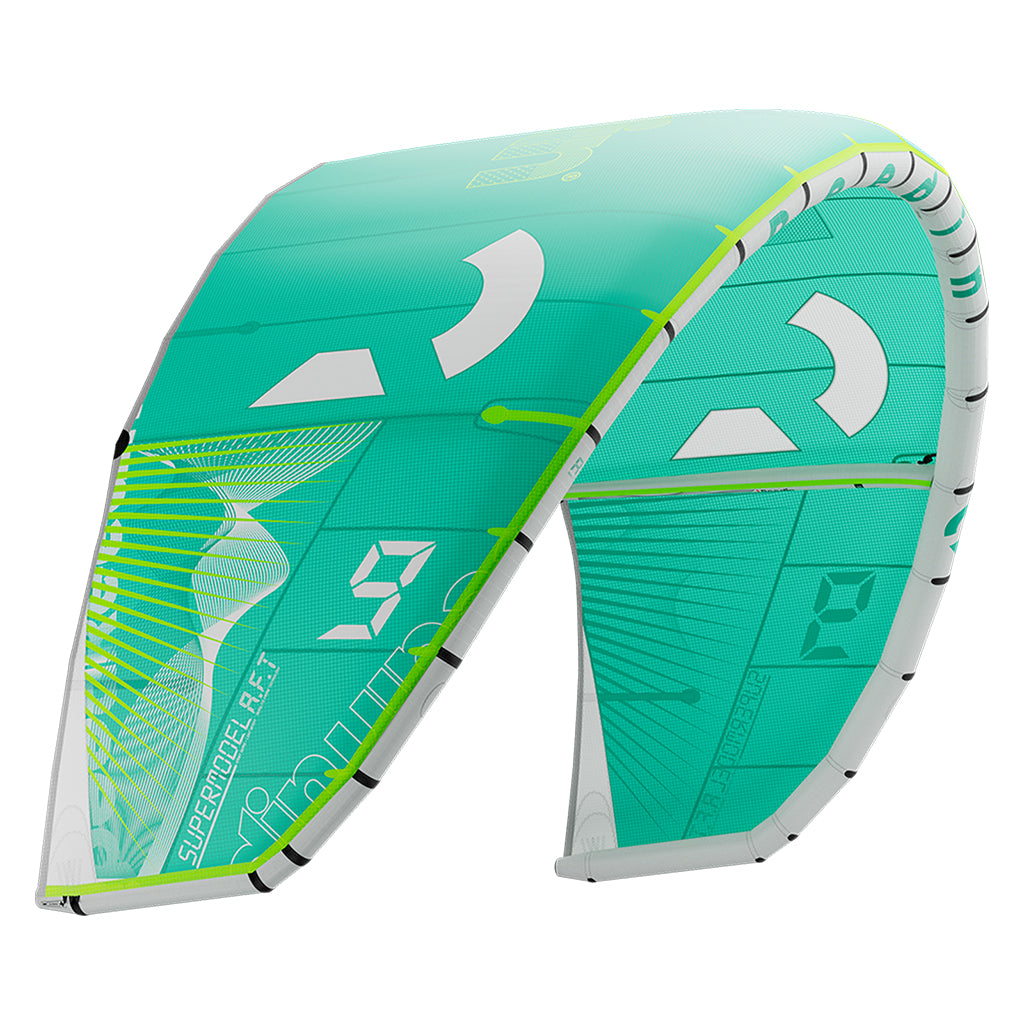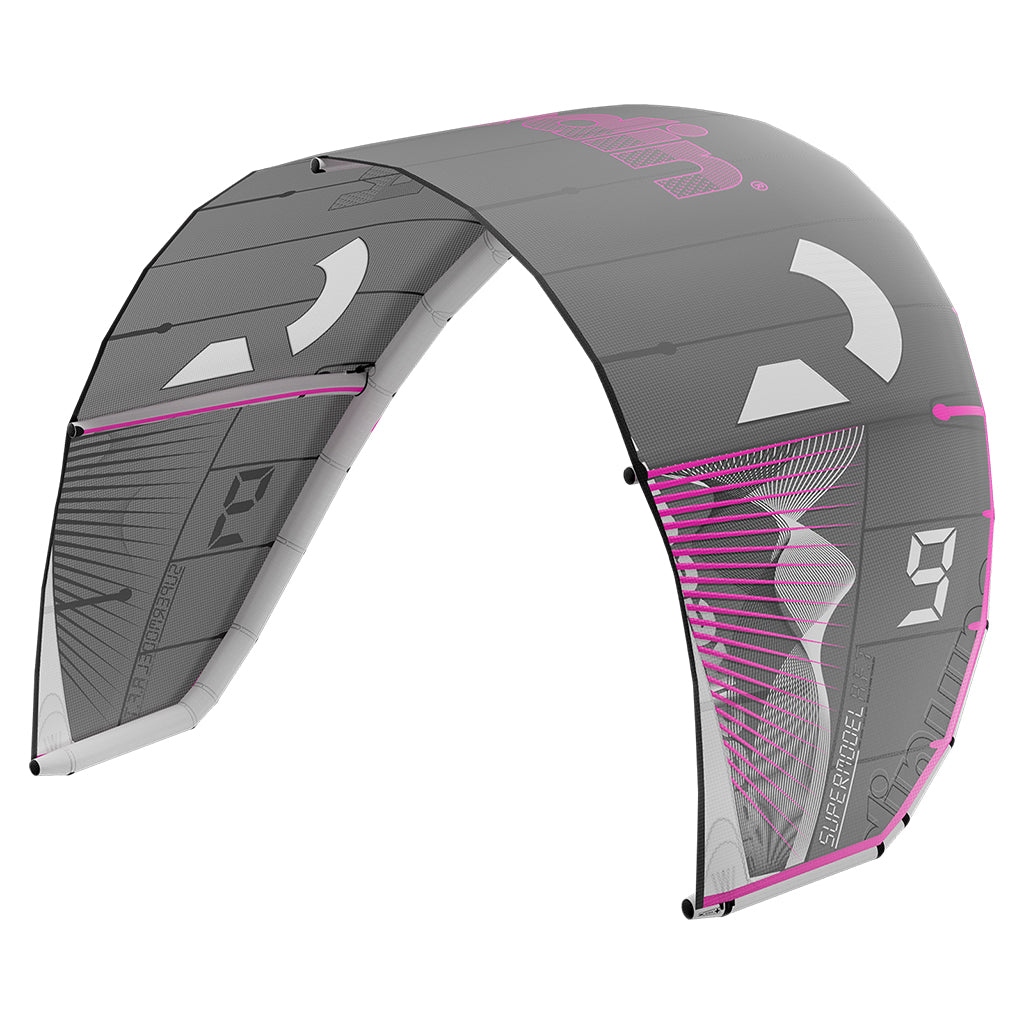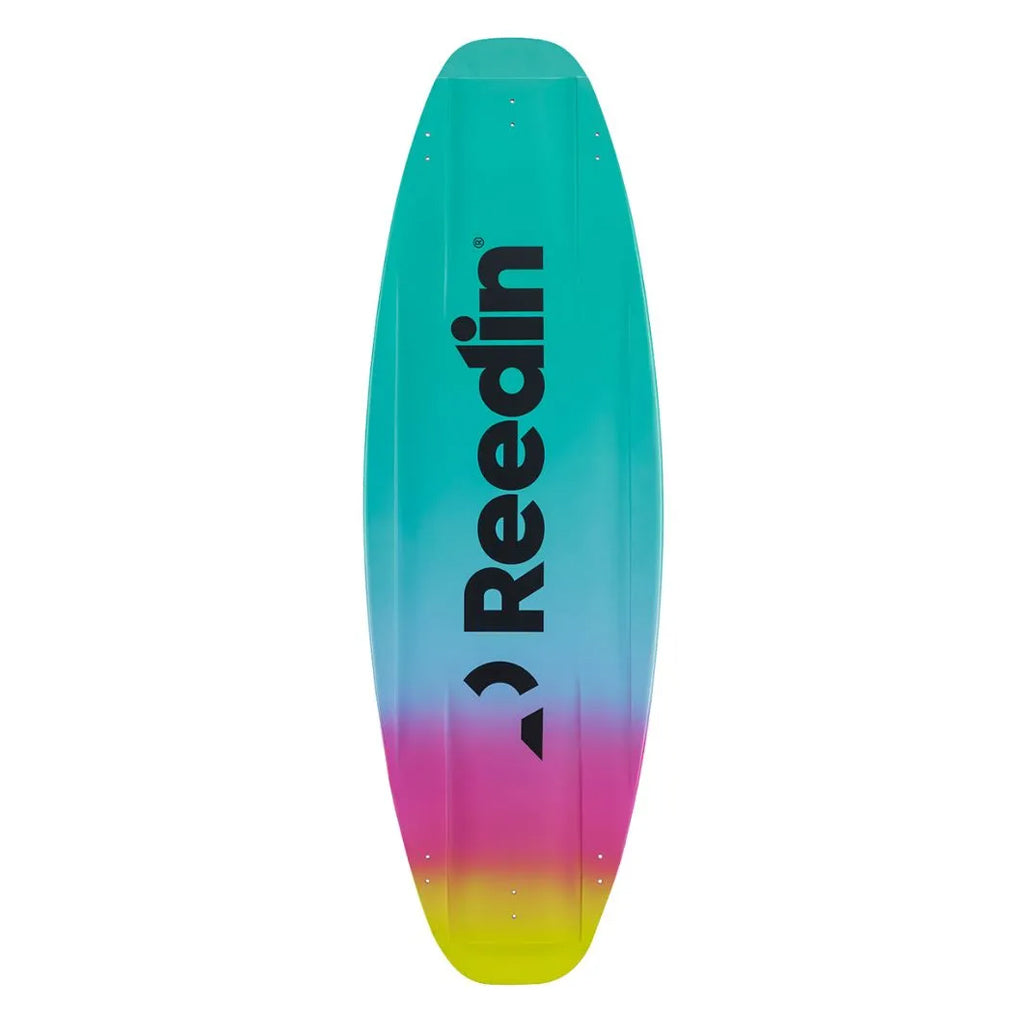
Reedin Kites is owned and developed by two of the sport's most prominent profiles: Prorider Kevin Langeree (who has won several titles and competitions, including King of The Air three years in a row from 2017 to 2019) and Damien Girardin (former designer for Naish kites and recognized as one of the best kite designers/engineers in the world).The Super Model feels literally like an extension of my body, it is so easy and intuitive that I can focus 100% on my riding knowing that the kite will simply do exactly what I need!I know it will never drop me out of the sky, it will always finish my kiteloops and the steering is so predictable that even if I’m upside down in a massive jump I can always feel where I am. By far the most reliable, easy, fun and intuitive kite I have ever got to ride.When riding a wave, the super model delivers great stability, fast turning, nice drifting and perfect power distribution.The super model is the culmination of years of kite design with the addition of a whole new computer simulation and countless hours of design, testing and fine tuning all details with our production facility. The result is a kite that totally exceeded our expectations.It is designed with a unique profile, that was developed using our new exclusive computer simulation. The goal was to ensure maximum performance with the greatest forgiveness, making sure that you would get virtually no front of back stall ever.It results in a kite that is always flying forward, helping you get upwind, being more responsive to bar input and overall be extremely forgiving to steering mistakes. The new profile is also proving very beneficial for advanced riders when sending big jumps and loops to make sure the kite will always support them. When waveriding this profile provides perfectly controlled depower for the most fluid top turns ever.But the Super model is not only unique because of its profile.One key feature of a kite is its ability to engage turns and the amount of pull it generates when turning; the faster the kite responds to bar input, the more initial lift you will get out of a jump, the better you'll position your kite while riding a wave, the easier you'll correct a steering mistake, the easier you'll water start.In order to have the nicest turn engagement possible and the most constant pull while turning, the Super Model’s Wingtip has been designed to provide the ideal combination between the lowest drag possible and the best transfer of steering input into the entire structure of the kite for the most efficient turns possible.Two important components are UPDATED in the Super Model’s wing tip. The relatively square shape together with the slight “break in the Leading Edge’s curve” allows for quick response to bar input by decoupling the Wing tip from the rest of the LE. When you pull on one side of your bar it allows for the wing tip to very quickly react and engage the turn. Once the turn is started the swept shape minimizes drag allowing the kite to finish every turn and provide that constant pull. This advanced wing tip shape uses our Super Segmented Wing Tip design providing perfect definition of the shape in 3 dimensions to control both the arc and profile to perfection.The Super Model’s number one characteristic is being versatile, we then went over every aspect of Kitesurfing when testing and designing. One key element that we carefully tested with some of the very best kite waveriders in the world is the ability to drift. The Wing tip shape and overall balance of the kite was then adjusted to excel in that area. The relatively square wing tip provides just enough drag in order to please those riders that like to park their kite and focus on their wave riding, while the quick turn engagement will please the ones that like to steer their kite back and forth when riding a wave.The bigger sizes have been carefully fine-tuned and designed in order to allow the kite to better twist and indeed turn faster, as we all know that the correct turning speed for a big kite is simply: faster!Bridle design is a major component of a kite. In order to properly fly, a kite must be as balanced as possible at any angle of attack. Technically, you want the center of effort (the virtual point where all lifting forces created by the wind flying through the kite would add up) and the tow point, the other virtual point where the sum of your bridles adds up and pull the kite towards you through the flying line) to line up perfectly.