The most important function of bindings is to hold the boot to the ski. The second most important is to release the boot.
Such contradictions make it a challenge for the engineers. But they have succeeded brilliantly. They have miraculously developed bindings that hold the boot in place when we ski, but release it the moment an overload occurs, potentially causing leg and knee injuries.
The system is built with springs in the front and back binding that can be adjusted according to weight. When the load exceeds the weight, the springs give way and allow the binding to release. The front binding can release sideways (and in some cases upwards), while the back binding can release sideways and upwards.
It is VERY important that the bindings are set correctly. This applies to both weight and level, but also to the length of the boots. The slightest inaccuracy can have fatal consequences.
It doesn't matter which binding you put on your skis. Top bindings are stiffer in construction and can be infinitely adjusted so that the boot is fully clamped. At the same time, a stronger spring and an optimal binding structure can optimize power transmission. A binding for beginners and less experienced skiers is not subjected to the same load, so cheaper materials and construction will not have a major negative impact. If a good skier chooses a binding that is too "light", they may experience slack, energy is lost and the binding releases too quickly.
DIN scale
For the binding to respond to load, it must be adjusted correctly. This is done according to a standardized scale, the DIN scale. For regular skiers, you adjust within a range of about 3-10, but the scale goes from 1 all the way up to 30 (bindings for downhill skiing). It depends on how strong the spring in the binding is. Many people think that weight alone determines which DIN standard the binding should be set to. But - there are many aspects. The skier's skiing skills, ski length and boot size are also important factors, as well as skiing style and discipline.
If you're not 100% sure how to set up your binding, come into one of the stores and have it checked. If you bought the equipment from One Open Sky, it's free. If you have the equipment from somewhere else, we'll agree on a price.
Tour bindings
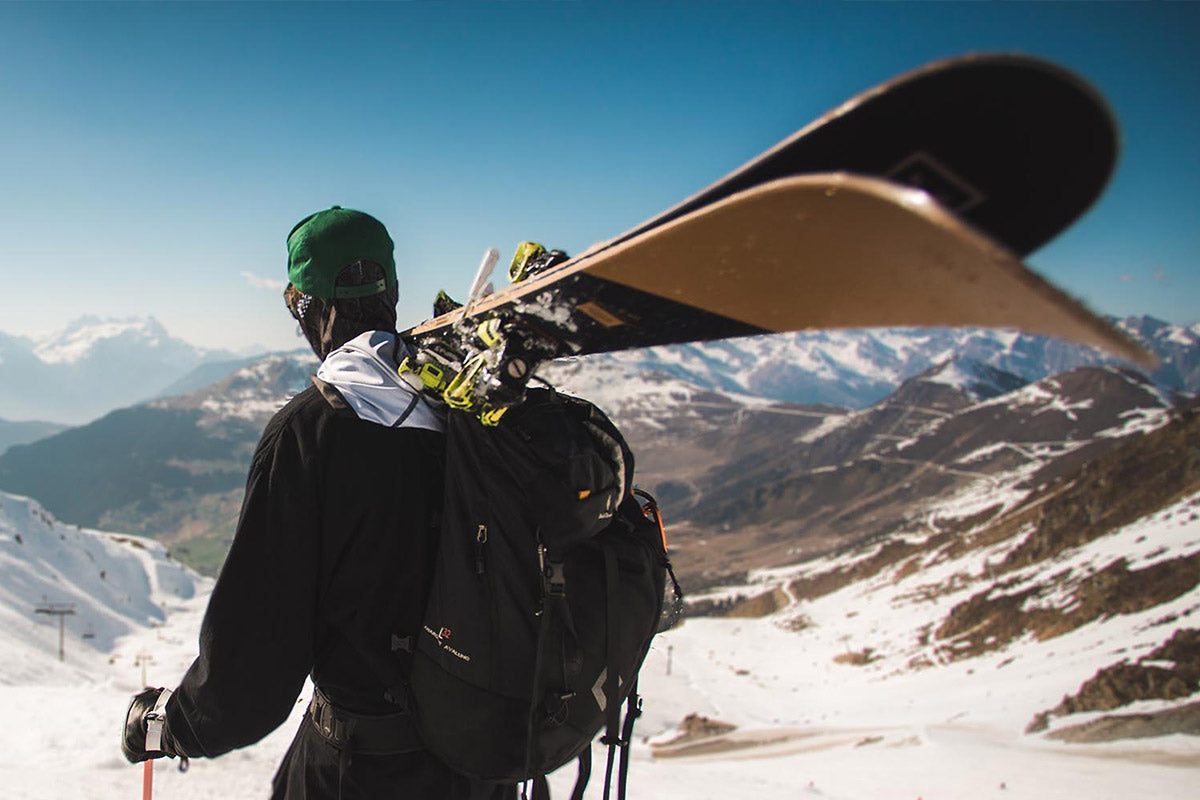
With the development of wide off-piste skis, it has never been easier to ski in deep snow. This means that the demand for the lightweight stuff has increased significantly. That's why Marker came up with a touring binding a few years ago that was based on a normal binding, but with a mounting that allowed it to be detached from the ski under the back binding. With skins under the skis, this meant you could go uphill without having to have special randonee equipment. Since then, most other binding manufacturers have jumped on the bandwagon. The clear advantages are that this type of binding has the same safety as traditional bindings and that you can make them with high DIN numbers. Something that is necessary for hardcore freeriding. The fact that you can use your normal ski boots is also a huge plus. The disadvantages are that you stand a little higher on the skis and don't have optimal feel for the surface and that they weigh more than tech bindings. In addition, you lift the entire binding with the boot when you go uphill. It's not a big deal if you're walking for 20 minutes, but lifting an extra kilogram for every step on all-day expeditions is tough.
Tech bindings
If you're serious about randonee or freeride touring, consider riding with Tech bindings. The system has been around for years and was developed by Austrian company Dynafit. The binding works by first stepping into the binding and securing the boot with pins in the boot's pin-insert (requires special boots), then stepping into the back binding (if you're going downhill). By loosening the back binding, you are only attached at the front and can move your heel up and down. The attachment point is on the side of the boot, so you don't have to lift your foot as high as on Tour bindings where the point is in front of the boot. You also don't have to lift the back binding with your foot when going up, which saves a lot of effort. Tech bindings are also lighter than others. Some models weigh just a few hundred grams! With the development of off-piste skiing, the need for stronger bindings has become relevant. The higher speeds in loose snow, drops and the extreme terrain that wide skis have opened up place higher demands on safety and hard springs. Therefore, the development of tech bindings has also moved in that direction. Tech bindings with DIN scales to 16 and rotating bindings are already available. So there are bindings for all needs.
Tech inserts.
When touring/randoneeing it is essential that the weight is low and you can move freely. That's why tech bindings are preferable for longer tours. They are lightweight and made so they only attach to the front on ascents. But - it requires matching boots. The binding works with two pegs on each side of the forefoot and two in the heel. Therefore, the boots must have tech inserts that fit the bindings. There are two metal reinforced holes on the side of the feet and a metal frame in the heel. If the boots don't have this, they won't fit with the tech bindings.
Grip Walk
With the growing interest in touring and randonee, more and more boots are being sold with pin inserts that fit tech bindings. The problem is that these boots also have a differently shaped sole (Grip Walk). It's more rounded at the toe and therefore the contact point for the binding sits further back. To accommodate people with this type of boot, new bindings have been developed where the toe plate can be raised and lowered. This way you can have a pair of twintip skis or pist skis even if you have Grip Walk soles and don't want more than one pair of boots.
Mounting
On most modern skis, there is a mounting system that fits a specific binding. No drilling is required, so it's easy to move the binding if someone else needs to borrow or you change the owner of the skis. Such systems are possible because ski manufacturers also make bindings or have a fixed agreement with a binding manufacturer. However, it's different for some types of skis. On race skis, freestyle and freeride skis, you still drill. There are several reasons for this. Firstly, you can have very different binding needs depending on your use, level and preferences. For example, some race skis require height and stiffening plates underneath and on twintips and freeride skis, you want to stand as close to the ski as possible, which system rails do not allow.
Freestylers also need to be aware of where on the ski they want their bindings mounted. Some models are completely symmetrical and lend themselves to a center mount, while others that are a little more piste-oriented are more traditionally mounted. It's very much a matter of taste and preference. If in doubt, talk to one of our freestyle staff, they'll know exactly what you need.
Binding height
The "clearance height" of the binding also matters. On a piste or race ski, it can be an advantage to stand a little high to optimize the edge angle, while for serious freestyle and off-piste skiers it's essential to stand as close to the ground as possible for better balance. That's why many piste skis are fitted with "rails" to mount the bindings on. They provide a few centimeters more height. In addition to providing lift, the rail also makes it easy to mount and adjust the binding. On the stiffest race skis, the bindings are mounted with screws on a "pre-drilled" plate or two plates on the skis. The plates help to ensure that the skis have optimal flex and provide the necessary lift. Mounting with screws prevents slack and ensures that the binding does not suddenly move at maximum load.
Twintips and freeride skis are still mounted with "old-fashioned" bindings that are drilled and screwed directly into the skis. Again, this gives you peace of mind that the bindings are securely fastened and also means that you stand lower on the skis. There has been a tendency to mount twins and off-piste skis with touring bindings. But touring bindings also give you a lift of a few centimeters. So if you're a hardcore freestyler or freerider, you mount the bindings low profile. If you want the benefit of touring or tech bindings, buy a pair of extra skis.
Pivot bindings
Pivot is the name of a legendary series of bindings from Look. The name refers to the heel binding, which can rotate for increased safety without compromise.
But actually, pivot means axis of rotation and all common bindings have more or less pivot in the binding. Even the new generation of tech bindings now have a pivot in the binding for increased safety.
Freestyle and Freeride bindings
Freeride/freestyle bindings are now being produced by all manufacturers. These are top quality bindings that are mounted/drilled directly into the skis. They are available with different brake widths to suit your needs and are usually compact so they don't get in the way when doing tricks. What's more, the binding can't release upwards! This is very important in heavy impacts where you may have some rear weight.
Brakes
Conveniently, the bindings are fitted with brakes. Designed to fall off in the event of a crash, the brakes save you some rather long walks down the mountain and also prevent you from being hit by errant skis when you're in the lift queue or on the piste.
The brakes come in different widths to suit different ski widths. This is important to keep an eye on when buying. If it's not wide enough, it won't unfold properly and can't brake the skis optimally. If they are too wide, they tend to go towards the snow when you edge hard. Worst case scenario, this means you can't ski on hard-packed and icy slopes!
A good tip to extend the life of your brakes: Many people tend to "kick" snow off their boots on the binding. When you do this, you tend to hit the closing function of the brake with your heel. Hard plastic ski boots that are repeatedly knocked against the closure function can easily cause defects and are unfortunately something we often see.
See our large selection of bindings HERE.