Kitesurf kites, also called kites, are one of the main elements of kitesurfing. It is the kite that creates propulsion using the wind, pulling the surfer across the water and making it possible to surf. Different kites look similar to the untrained eye, but there is a big difference in construction and purpose. Buying the right kite that suits the way you want to surf is crucial to getting started on the water. Follow along here to learn about some of the types of kites available and find out which category you fit into.
Freeride Kites - The most versatile kite design
Freeride kites are designed for surfing flat and choppy water. They provide a stable and good pull making them suitable for many kiters, including beginners. With a freeride kite you can do it all, such as jumping, surfing waves and doing tricks. It's typically a freeride kite that you start with when you're introduced to the sport because it's all-round and versatile.
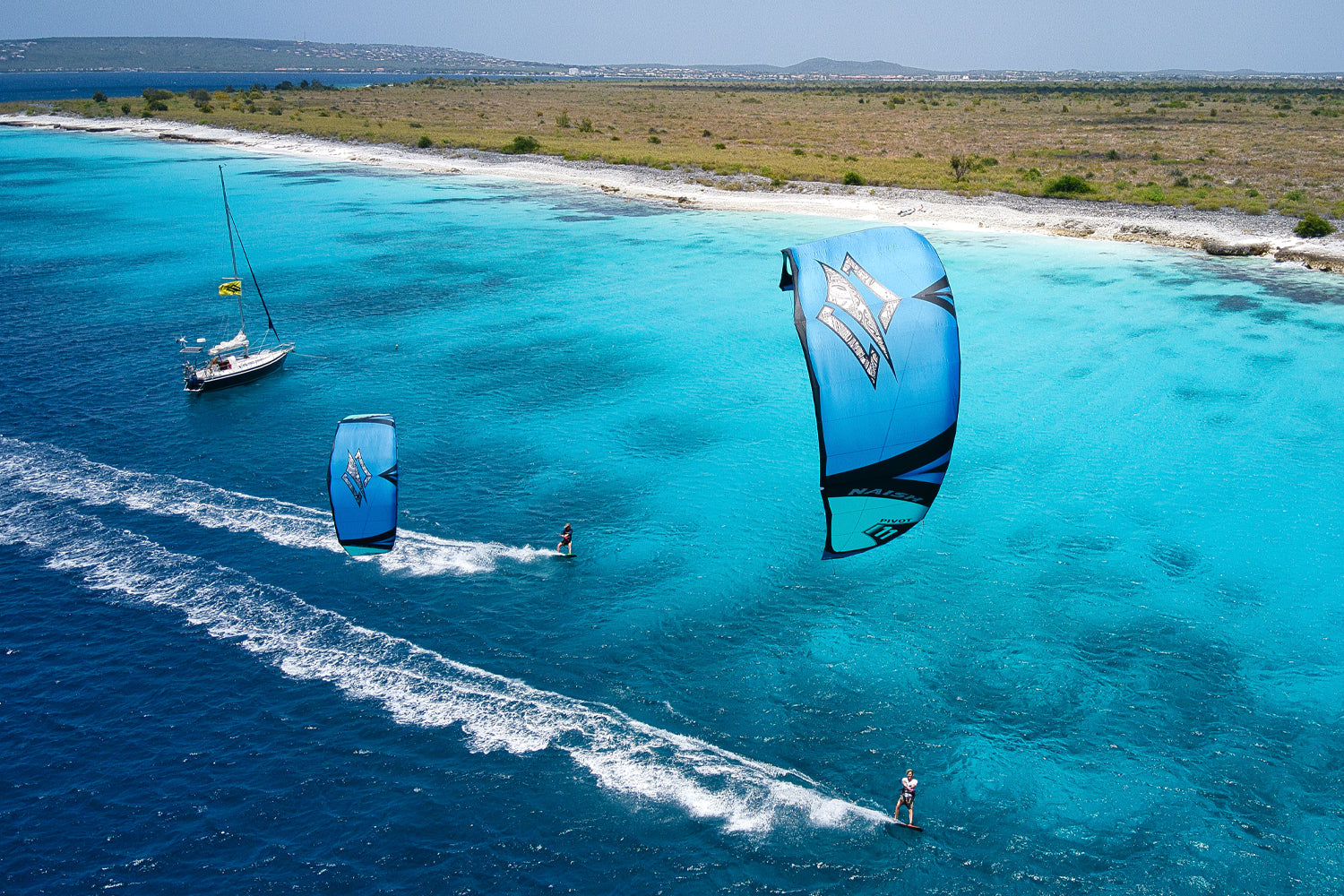
All kite brands have at least one freeride kite in their range. This is because it is the largest kite discipline and this type of kite is the best all-round kite if you need a single kite for several disciplines. If you're curious to see a freeride kite, look for Naish's "Pivot", Reedin's "Supermodel" or Cabrinha's "Switchblade" as examples.
These kites can be used from beginner to experienced and you are guaranteed a lot of good hours on the water with great development potential.
Big Air
Big Air kitesurfing is the extreme version of freeride where it's all about making jumps as high as possible and doing different tricks while in the air. With a Big Air kite, predictability is very important so you can rely 100% on the kite when hanging 20 meters above the water. In addition, Big Air kites provide a big pull to help you get up high. This discipline is high risk and requires a lot of training and routine to perform. Big air is often seen in competitions such as King of the air (KOTA) and Cold Hawaii Games.
Wave / Wave kite
Wave kites are used for kitesurfing in waves. This places different demands on the kite than freeride kitesurfing does. By using a wave kite, you get a kite that moves with the wind (drifter). This means that it follows you when you're fully focused on surfing the waves. In addition, wave kitesurfing also places high demands on power control and response time of the kite, so you always have full control of the kite and can maneuver fast and hard if necessary. Kitesurfing in waves is a very attractive discipline but typically for more experienced surfers.

Freestyle Kites
Freestyle discipline is a playground for the good kitesurfer. Freestyle kitesurfing is all about doing tricks, jumping and looking wild. In addition, a large part of the discipline is also unhooked. Unhooked is when you take the loop off the hook of the trapeze and hold the kite in your arms. This allows you to rotate around yourself and do other wild tricks that aren't possible if you're strapped to the trapeze.
A freestyle kite reacts very quickly and is typically less forgiving than a freeride kite. If you want to go freestyle, there are both c-kites and hybrid kites made for the purpose. C-kites are 100% dedicated to freestyle and when you ride them you can generate slack on the lines so you have more time to perform tricks in the air. However, the C-kite is harder to sail and relaunch when you crash it. You therefore need to be an experienced kitesurfer to attempt the freestyle discipline with a C-kite.
The hybrid kite is more like a freeride kite. It typically flies faster in the window and can therefore be used for freestyle as it maneuvers faster.
Lightwind kites / Foil Kites
Lightwind kites reveal themselves a little, as they are kites that are built for days when the wind is not powerful. The kites are built to weigh less and can therefore fly in less wind.
Lightwind kites are often used as foil kites as you don't need a constant pull from the kite but rather a pull to get up on the foil. This is why you can often see kitesurfers foiling on days when there isn't enough wind to stand on a TwinTip.
How do you find the right size kite?
The size of the kite you take out is crucial for your experience on the water. That's why you'll hear kitesurfers talk about having a range of, for example, 6-8-10-12 or 7-9-12. The numbers refer to the size of the kites in square meters. The more square meters, the more drag the kite will generate when in the air. It's important to pay close attention to getting the right size kite in relation to a number of parameters: Wind speed, Weight, Level and Discipline. As a new kitesurfer, it can be difficult to assess what size kite to set up if you don't really know how windy it is when you stand on the spot. It's always a good idea to see what sizes others are surfing with in your own weight class. If you're still unsure what the best solution is with the equipment you have, we always recommend asking other more experienced surfers on the beach what they think.
Because it varies so much what size kite to use on different days, it's very common to have 2-4 kites to maximize the number of days on the water. To find the right size kite(s), it's a good idea to talk to some kitesurfers who have experience in the area you want to surf in. Of course, you can always contact us by email, phone or chat if you have any questions about how to go about it.
The different kite shapes
The two most popular kite shapes are Bow-kites and C-kites, both have their strengths, with the Bow-kite being by far the most versatile and best-selling, the C-kite has its strengths in the freestyle discipline. But what should you choose?
Below are a few more details about the two kite shapes.
Bow kites
The bow kite is the best-selling kite shape worldwide. This is because it is very reliable without compromising on performance. Whether you are a beginner or an expert, you will always be able to excel on a Bow Kite.
One of the reasons why the kite shape performs so well is that the shape is good upwind and instead of having the lines mounted directly on the kite, it has a bridle system. A bridle system is a series of lines that are mounted on the leading-edge (the front edge that is inflated on the kite). The leading lines from the bar are attached to the bridle system, making the pull more stable. This makes the kite fly more stable in the air and easier to release. It also increases the possibility of trimming the kite - that is, you can reduce the kite's pulling force while you're on the water.
If you want a good all-round kite that you can continue to develop on, the Bow kite is a safe choice. If you would like to see examples of some great Bow kites, take a look at:
Naish Pivot Cabrinha Switchblade Reedin SuperModel
C-kites
C-kites are for freestyle riders who do tricks hooked and unhooked. The C-kite gets its name from its shape, which is in C and looks like a rectangle from above. The end of the kite also has a sharp edge, which contributes to the fast response. With a C-kite you can create more slack on the lines which gives you time to rotate in the air without the kite pulling. This is only suitable for Freestyle.
The C-kite is for more experienced kitesurfers as it requires a good level to be able to surf and get the most out of the kite.
If you have kitesurfing preferences, you'll also know which brands have historically been good at making kites. Brands like Naish and Cabrinha are two big players that have been around for many years and have won countless awards, gaining experience in terms of production and quality.
A new brand that has emerged since then is Reedin, founded by Naish's former chief designer together with a team rider. All three brands are solid and established brands in kitesurfing that you can trust in terms of performance and quality.