When should you use a wetsuit?
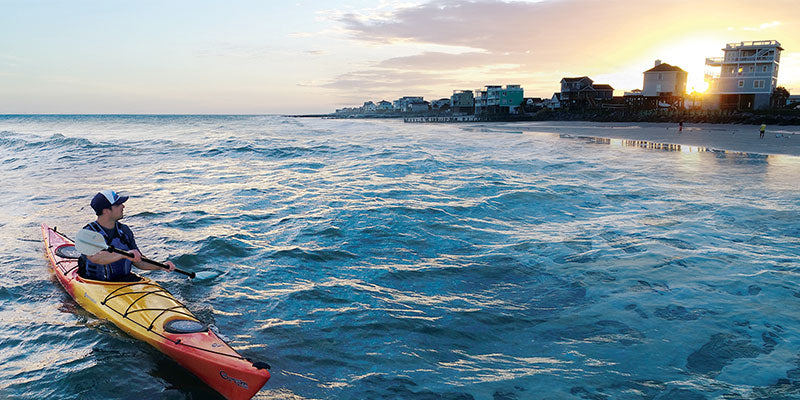
A wetsuit is the obvious choice for water sports or other cold water activities. The structure of the wetsuit helps keep the body warm and is therefore ideal for surfing, kayaking, paddleboarding or water skiing.
What environment do you practice water sports in?
The wetsuit is designed to keep you warm in the water, and there are even wetsuits for really cold water. As in the introduction, the wetsuit is made of a synthetic rubber material. The material is made with many small air bubbles in it, which trap the air and use your body's heat to warm the suit, and thus also warm you. In addition, a small layer of water trapped in the wetsuit is heated by the body temperature and subsequently helps to keep the body at a constant temperature. If you choose a wetsuit that's too big, you risk the wetsuit taking in too much water and you'll end up freezing.
Wetsuits for summer
It could be that your water sport is best suited to summer weather or that you just prefer when the sun is shining and the water doesn't give you goosebumps. After all, it's most fun when the water temperature is around 20 degrees, but an activity in the water around 20 degrees is far too hot in a general wetsuit that has a thickness of over 3 mm, as an alternative, the thermal top is a popular replacement for a wetsuit, and if it's around the change of season or you're just a little chilly, it's also good under a wetsuit for some extra warmth.
Wetsuits for winter
If you practice water sports in cold conditions, we recommend a thick neoprene wetsuit as it is clearly the one that will do the job best. A wetsuit insulates the whole body against the cold water and comes with a material over the chest that absorbs the wind. There is a wide range of classic neoprene wetsuits, distinguished by thickness, materials, stitching and the way you get into the suit. Many serious water sports enthusiasts use a winter wetsuit with an integrated hood or have purchased a loose hood on the side.

The thickness of the wetsuit
As mentioned earlier, the water has a big impact on the thickness of your wetsuit. Colder water conditions lean towards a thicker neoprene. If we take a look at the thickness of the wetsuit, it is usually given as two numbers from 1 to 6 divided by a slash. The number to the left of the slash indicates the thickness of the wetsuit around the torso and the number on the right side is the thickness around the arms and legs. The reason you have a thicker torso is to retain more heat around the body organs and thus keep you warmer for longer. Another reason is that if you have thick neoprene around your body parts that move a lot, you restrict freedom of movement for every mm of neoprene you add. Below we have put together a small table that gives a very good overview of the water temperature and neoprene thickness needed. If you are sensitive to cold, you can take a thicker suit than recommended, but otherwise our suggestions usually go hand in hand with reality.

How should the wetsuit fit?
We can't emphasize how important it is to get the right fit. If the suit is too tight, it will reduce your flexibility and freedom of movement. If it's too loose, too much water will enter, which can affect body temperature and a surfer's ability to move. All wetsuit brands produce different sizes and fits. If you've tried an O'Neill wetsuit, you can't be sure that the same size will fit just as well in a wetsuit from Neilpryde. However, most brands come with a size guide specific to their suits, which could save you a lot of time in the end. When looking at a wetsuit please open the size guide, if you have any questions about the size guide, you are more than welcome to contact us.
Wetsuit sizes for kids?
The big question is how to find the right wetsuit for children. If you buy the suit in an ideal fit, you run the risk of it already being too small after 6 months. It's better for junior to have a wetsuit than not to have one, so it's best to find one that's slightly larger than the ideal fit. It doesn't matter if the suit is too long in the arms and legs. Instead, make sure the wetsuit isn't too big around the waist as that's where excess water collects, which can be the start of a cold ride. When it comes to sizing, the most important thing is that the size is more accurate around the waist and chest. If the wetsuit fits around the chest and waist, you're more likely to get a suit that provides a good fit over time. See our selection of junior and kids wetsuits.
Ways to get into the wetsuit
There are now several ways to get in and out of your wetsuit. It doesn't sound like a big detail, but for the waterproofing of the wetsuit it actually means a lot.
Back zip
A wetsuit with a back zip has a zipper that runs from the top of the suit at the neck down to the lower back. Back zip suits make it easy and convenient to get in and out of the wetsuit. The zipper material is less flexible and often less water resistant, so the back zip system is a good solution for the beginner or the water sports enthusiast who is primarily used in warmer water temperatures. The Back zip wetsuit's strength lies in the easy access to the opening system. It is therefore often seen among triathletes and swimmers who really appreciate a fast system.
Chest zip
The Chest zip wetsuit has a zipper that runs across the upper chest and up past the shoulder. Chest zip wetsuits are considered more flexible around the shoulders and back. They have a better insulating ability for those colder trips in the water, but they also require a little more effort to get into than back zip suits.
No zip
No zip wetsuits have no zippers and can be a bit cumbersome to get into. That said, there is no better flexibility in neoprene suits than there is in no zips. Several brands use No zip among their top models, which are designed to perform at a high level.
Front zipper
Front zips open with a zipper that runs from the top of the neck down to around the navel. The system is easy to use and doesn't take long to get into, but it's also common in summer suits and women's suits designed for warmer water temperatures.
Seals and seams
When designing a wetsuit, we also look at what kind of seams the suit should have. Wetsuits are composed of different pieces of neoprene, and for each composition it also requires a seam. The design of the stitching can have a big impact on the flexibility and warmth of the wetsuit, so it's an important element to consider when choosing the right wetsuit.
Overlock stitching
Overlock stitching is considered the simplest way of joining 2 or more pieces of neoprene together. This method is not as effective at keeping water out and is often only found in summer or cheaper wetsuits these days. Overlock stitching is not used in high performance wetsuits, as the method also leads to a reduced quality of flexibility in the suit due to the many stitches.
Flatlock stitching
Flat lock stitching is when several pieces of neoprene are joined together using the zigzag stitching method. It has become a tradition that this method is only used for summer suits as the holes from the zigzag stitching allow for greater breathability in the suit.
Glued and blind stitching
Glued and blind stitching is also known as GBS. GBS is used on many of the higher quality modern wetsuits. With GBS, the neoprene pieces are glued together and then stitches are made that only go halfway through the neoprene. This means that the stitching does not make unnecessary holes in the neoprene or come into contact with the skin, and the level of absorbed water in the suit is kept to a minimum. GBS wetsuits are incredibly effective when it comes to wetsuits for cold water temperatures. Some brands even go in and do the GBS stitching multiple times to make the seal in the wetsuit even better. You'll find GBS seams in most winter wetsuits.
A welded seam
A welded seam combines and seals the neoprene with a silicone-based material, urethane. Urethane acts as a 100% barrier so that water cannot find its way into the suit. Welded seams are a common feature in many top models, and for good reason. The suit becomes much more flexible, and the chance of a seam opening up is eliminated.
Taped Seams
Many wetsuits are reinforced with a seam technology called "taped seams", which simply means that a piece of neoprene tape is added over the areas that have an increased risk of tearing.
Neoprene types
In our range at One Open Sky you will find many different types of neoprene. The most commonly used are Ultraflex, Technobutter, Fluid Foam, Limestone and Nam Liong.
Each type of neoprene contributes something different and is at different places on the quality scale.
Limestone
A Limestone neoprene can be found in the top suits at Neilpryde. Limestone neoprene is made in a different way that makes it superior to other neoprene shapes in almost all parameters. In a Limestone neoprene, limestone is used to connect the neoprene particles instead of oil. Limestone clearly offers some environmental benefits as it is a resource that is easier to clean up than oil. But beyond that, Limestone neoprene is also lighter, warmer, more flexible and has increased durability.
Technobutter
Technobutter is an oil-based neoprene that has excellent flexibility and warmth properties. Technobutter neoprene can be found in O'Neill's Hyperfreak and Psycho Tech model ranges. Technobutter is 20% lighter and absorbs 30% less water. The lighter neoprene lets you surf longer and enjoy the water more. The stretch of Technobutter varies from 160-220% depending on the type.
Ultraflex
Ultraflex is a stretchable neoprene found in O'Neill's Epic, Hammer, Bahia and sometimes Reactor series. The neoprene can stretch 150% and is made from 80% recycled materials.
Fluid Foam
Fluid Foam neoprene is the most obvious choice for those who go out more than a handful of times over the summer. It's a cheaper neoprene that's still stretchy and comfortable. The neoprene is durable, which makes it ideal for the beginner and has a stretchability of 75%. Fluidfoam is used in the Reactor-2 and O'Riginal series.

How do you look after your wetsuit equipment?
We all want a wetsuit that lasts well, and preferably for as long as possible. When the wetsuit is in use, there are also some things you should pay attention to so that your gear is not exposed to unnecessary wear and tear.
Getting your wetsuit on and off
Getting in and out of your wetsuit can sometimes be a bit of a hassle, but a good piece of advice is not to let the stress get the better of you. Stretching the wetsuit unnecessarily will ultimately result in wear and tear on the wetsuit seams, which is the last thing you want to damage. Always start with your feet, and if you have trouble squeezing your feet through the suit, it's a good idea to put a plastic bag around your feet before you try. Always check that the wetsuit is 100 percent correct before closing it. If the zipper or closure system is stressed too much, it will ultimately affect the seams and fit of the wetsuit.
When it's time to take the wetsuit off, it's also about having a little patience. Wetsuits may seem stubborn, but the more relaxed you take it, the gentler it is on the suit. Turn the suit inside out so that it dries faster after use.
Things to avoid after using your wetsuit
The biggest mistake when it comes to storing your wetsuit is that many people just fold it up, throw it in a closet and maybe it's even still a bit damp and wet. This often results in a fit that isn't very comfortable and snug, and if the suit has been lying around for a long time, it may even have ingested a bit of mold. If you are one of those people who take your wet or damp wetsuit and throw it in the closet, you may find that the glue in the seams of top suits slowly gives way.
Hot water is not a good solution for wetsuit cleaning. If the water is too hot, it can dissolve the glue used as a sealant in many modern wetsuits.
When the wetsuit needs to dry
To get the most out of your wetsuit, it's also a good idea to clean it after use. The salt water from the Danish coasts stops the wetsuit from drying and reduces its elasticity. Always wash your wetsuit with fresh water at the end of the day. It's always best to wash your wetsuit with wetsuit cleaner and conditioner. Wetsuit cleaner goes in and eliminates the dirt and grime that fresh water cannot.
If possible, avoid letting the wetsuit dry in direct sunlight. Too much sunlight can ultimately result in drying out the neoprene material in the wetsuit. Hang the wetsuit over a clothesline around the lower back, as hanging it from a hanger around the shoulders can result in extra pressure on the seams around the shoulders. You should never dry your wetsuit in the dryer! When the wetsuit is dry, we recommend hanging it on a hanger where it is not in contact with sunlight or other heat sources such as a stove or similar.