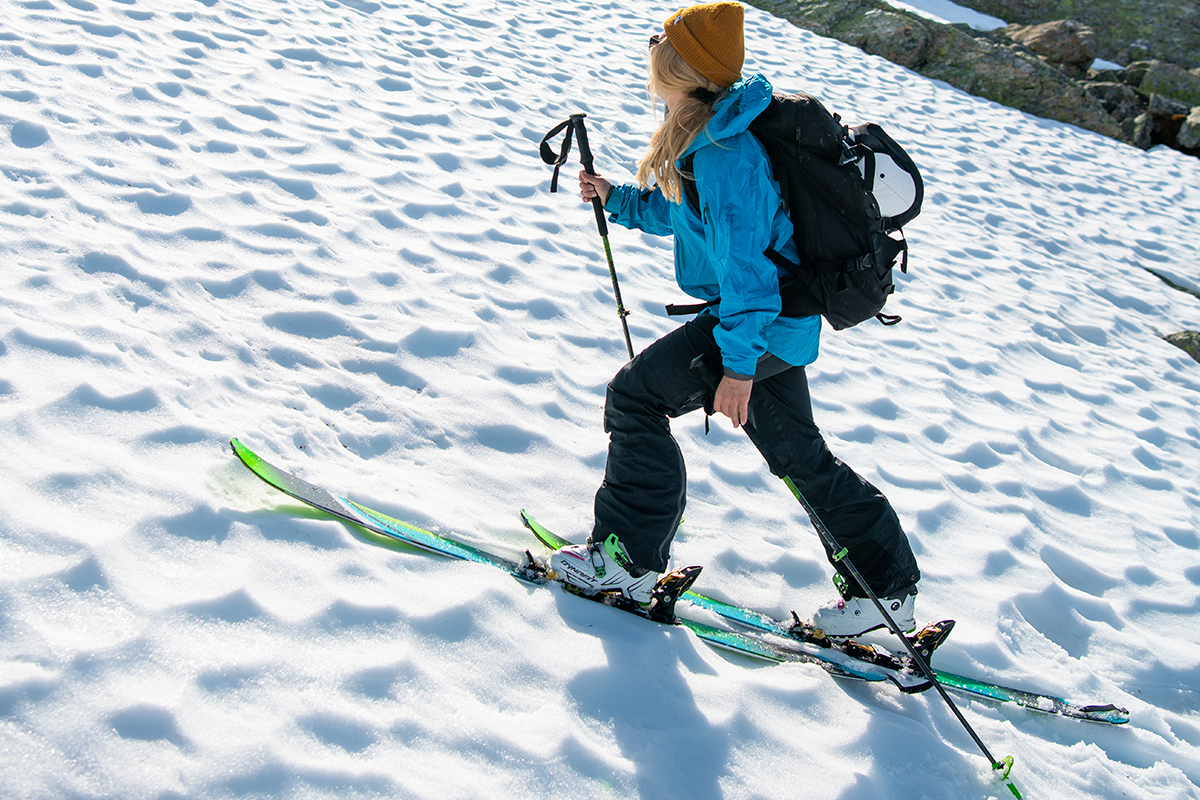
No matter how much you invest in avalanche equipment, you can't be 100% sure of avoiding disaster. Knowledge and awareness are still the most important companions in avalanche risk areas. Still, it makes sense to invest in equipment that can reduce the risk to life in the event of an accident. IT'S A MUST to carry a beeper, shovel and probe. This is not equipment to save yourself, but only so that you can rescue a friend who is trapped in the snow. That's why you should never ski off-piste with friends who don't have the right equipment and know how to use it!
Beepers
When choosing a beeper, you should first and foremost pay attention to the functionality and transmit/search properties. Preferably choose one that has three antennas, especially if you do a lot of off-piste running. Beepers with one antenna are primarily designed for those who ski close to the slopes and in areas that are secured and where there is no risk of large-scale avalanches. Beepers with an antenna are inaccurate in searching and therefore take longer to cover an accident area. Time is the most important factor when an accident occurs because 80% of avalanche victims die from lack of oxygen within 15 minutes.
There are different ways to use the beepers depending on the brand. Eventually, however, all are very easy to use. The most important thing, of course, is that you familiarize yourself with how the beeper you are using works.
Sonder
The most important thing about the probe is that you are able to use it. Choose a model that is easy to unfold in stressful situations and learn how to use it. There are probes that have a seeker (on the same frequency as the beeps) and are therefore more accurate than the traditional probe. They are basically an extra safety measure and not a must for safety equipment.
Another issue is weight. Hardcore touring/randonee racers naturally gain weight when they're lugging themselves over the high peaks. Of course they choose carbon probes!
Shovel
If a person is under a meter of snow, you basically have to dig out 2 cubic meters of snow to get them out! You can't do that with a plastic sandbox shovel. You need a robust shovel, preferably with a handle that can be extended so you can really get a grip. Again, of course, it should be easy to assemble so you don't spend unnecessary time when it counts.
There are also lighter carbon shovels. This could be an obvious choice for the lightweight enthusiast, but you need to be absolutely sure that you don't compromise on stability... Not so much in the carbon itself, but more in the joints. A good solid shovel is also indispensable when building a big backcountry kicker and hanging out on a sunny afternoon.
Backpacks
The backpack is also an important part of avalanche gear. Again, it needs to be functional so you can get your gear out quickly. In addition, there are a number of other factors to consider. It needs to fit so it's not loose (or too tight) and interfere with skiing, and you need to choose a size that fits what you need to wear. Otherwise, your gear will be too loose and you'll be carrying too much weight. It's also important that it sits close to your back and has a "flat" profile. If the weight of what you put in it sits too far back in the backpack, it affects your balance and negatively affects your skiing. Of course, this is mostly true when you have Primus, camera, thermos, water, tent, etc... But it's actually surprising how much a half kilo, placed incorrectly, can affect your skiing.
If you go on long trips, it can be useful to have a hydration system so you can drink water without having to take your bag on and off. For cold days, you should also think about insulating the hose so it doesn't freeze.
As mentioned, the basic equipment is there solely so that you can rescue your companions if they get caught in an avalanche. The best thing you can do to keep yourself safe is to invest in an avalanche backpack. Both ABS and BCA make some great bags that are now light enough to carry around all day. Again, the bag can't save you from ending up in an avalanche, but it can multiply the likelihood of you surviving the encounter with the snow masses.
In reality, the bag is a large airbag that deploys when you activate it. It increases the combined density of you and the bag, but not the weight. This means that the combined density of you and the bag becomes lighter than the snow, so you "float" on top. There are some amazing statistics showing that it works as intended and that in more than 90% of cases where an avalanche backpack has been activated, it has saved lives! As with all safety equipment, it's important to familiarize yourself with how it works.